Here’s the first interview of a series dedicated to rum personalities. Unlike most interviews, this one leveraged the RumX community curiosity to come up with highly specific questions, and is aimed to satisfy both new joiners and seasoned enthusiasts.
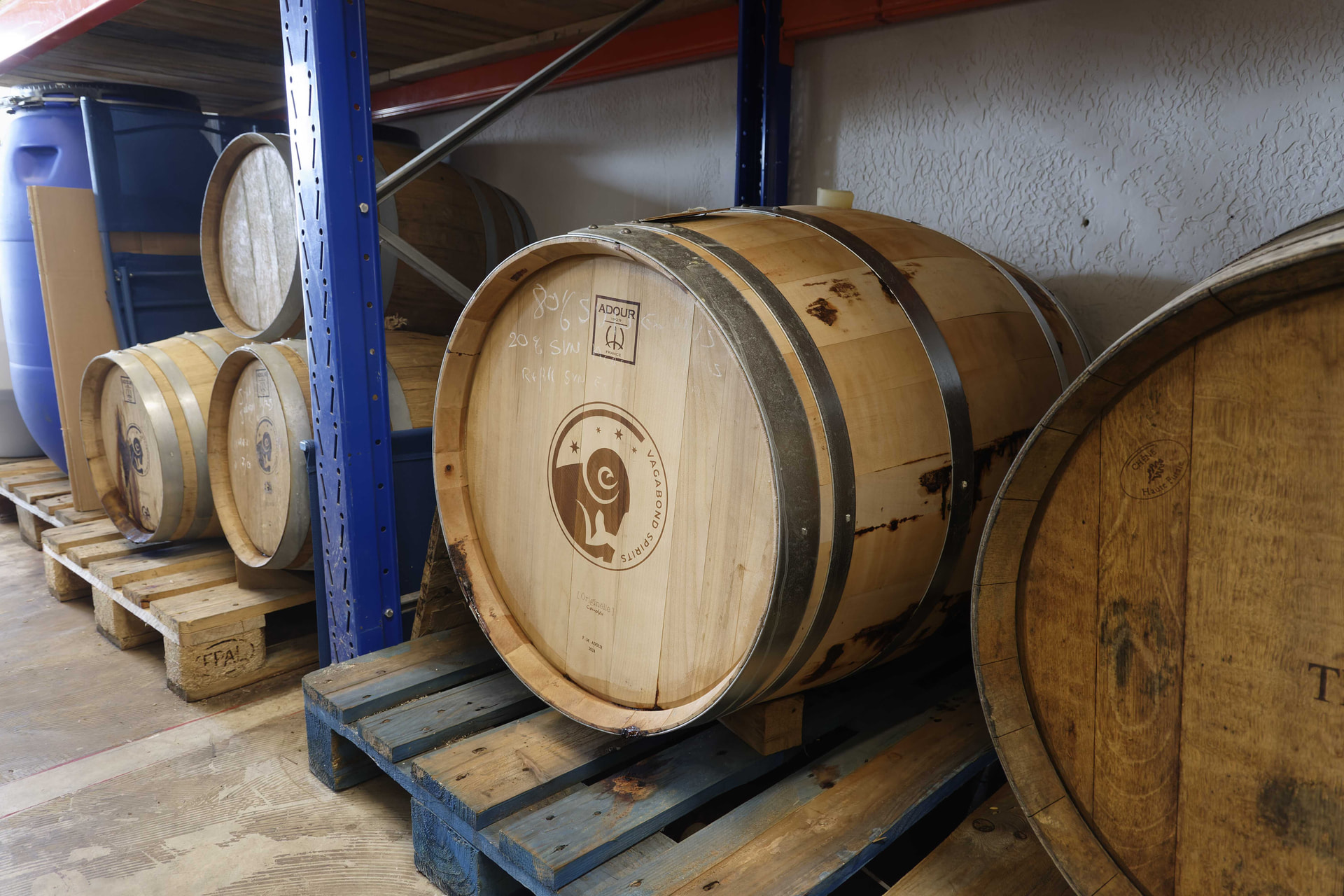
Our first guest is Nicolas Petit, the mastermind behind Vagabond Spirits, based near Marseille in the Southeast of France. Through the past 4 years, Vagabond Spirits made itself a name among Independent Bottlers (IBs), being highly focused on experiments, using extreme aging conditions, unusual wood essence for cask aging, or unorthodox blends.
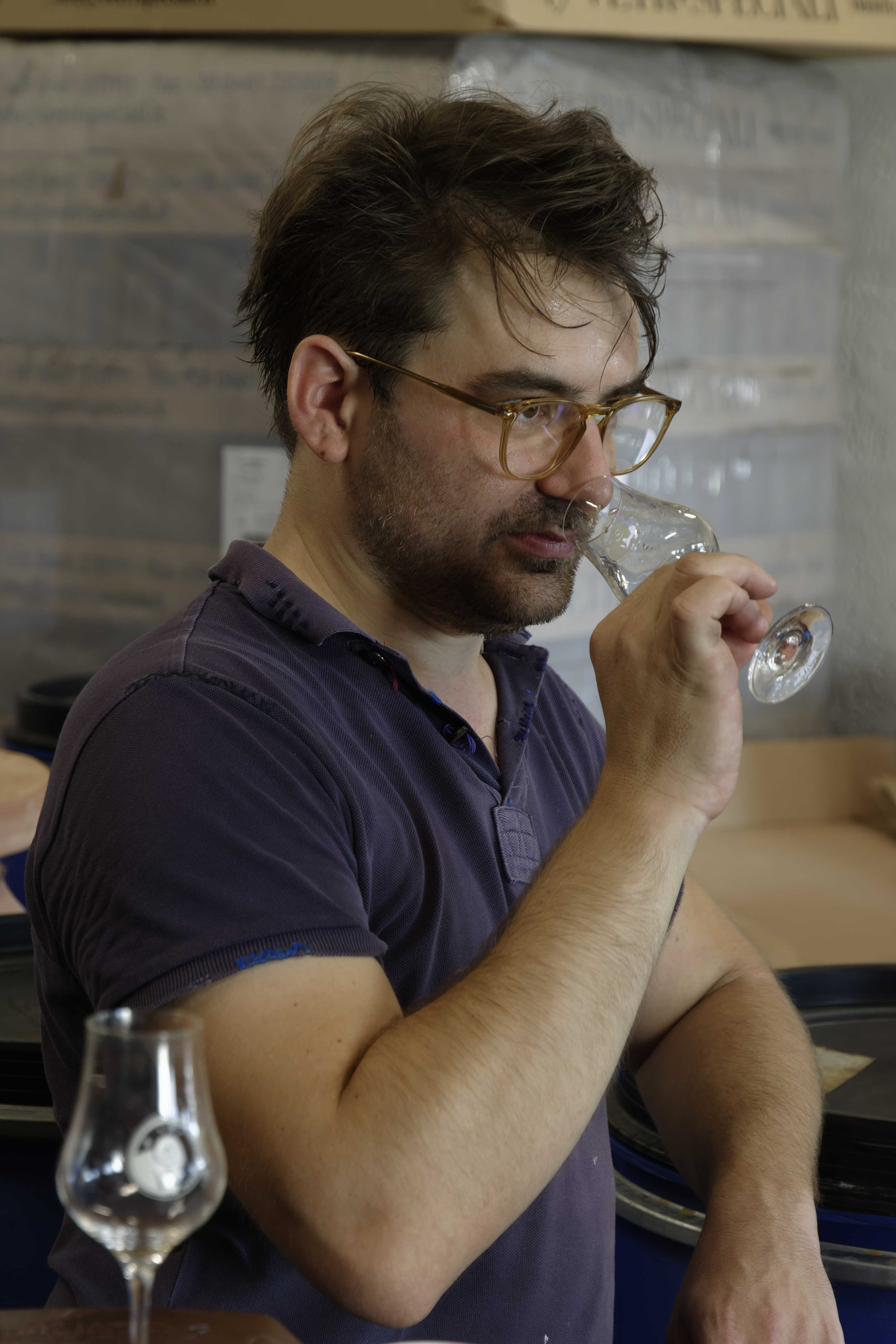
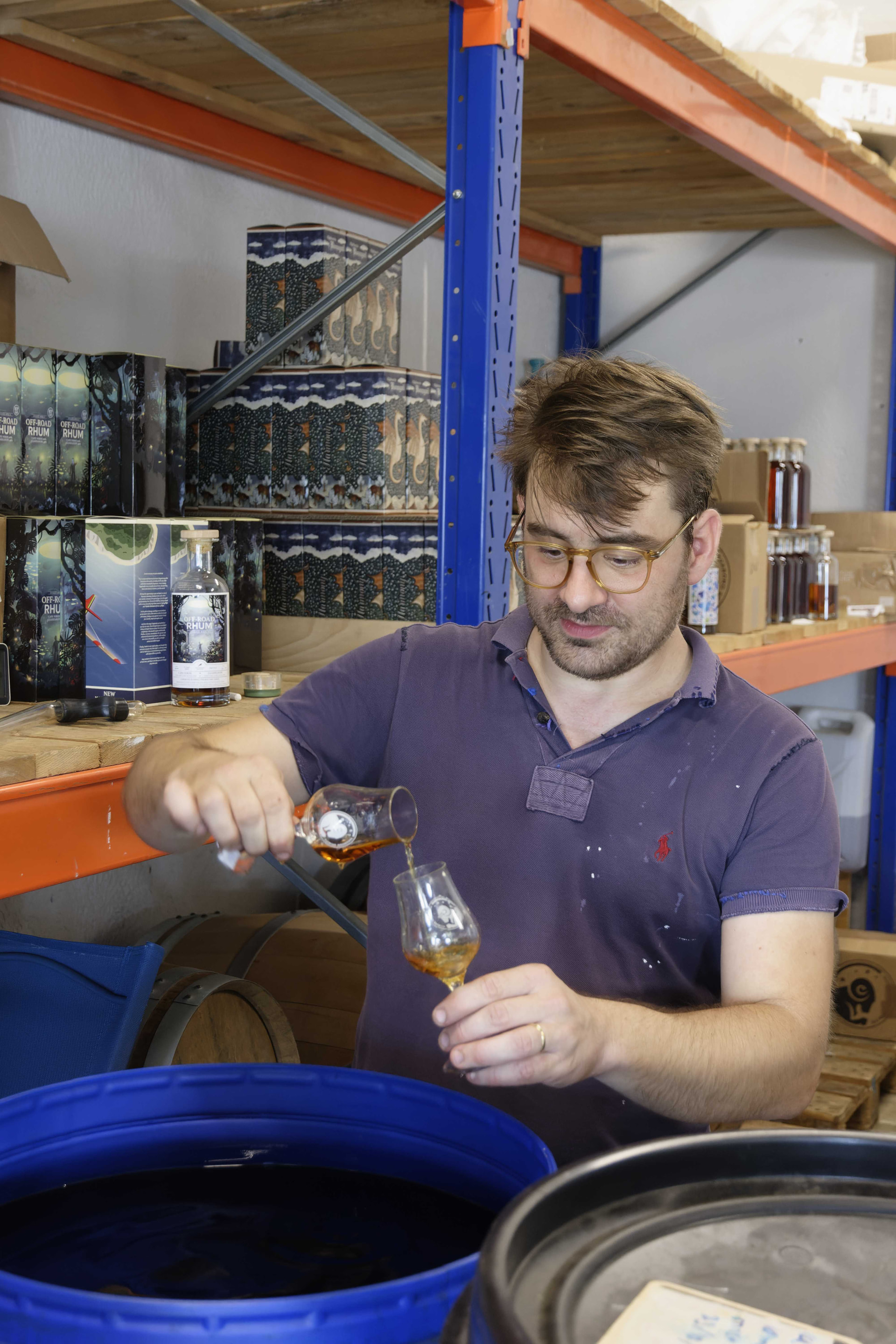
Nicolas has accepted to answer my, and the RumX community questions, right within his rum cellar:
- How does one become an Independent Bottler?
In my case, it came up naturally, step by step. I was working for 11 years in my family’s spirit shop, with a 300+ rum collection. One day, I realized that only a handful of them were actually really interesting to me, and that’s when I decided that I would be doing my own rums. I’m a DIY type of guy, I started a collaboration with Guillaume Ferroni for the off-road batch #1, then I continued with the batch #2, and after a year and a half I got to the point where I had the casks to develop the brand further.
- The specificity of Vagabond Spirits is its focus on experiments, which is a huge risk. How does it work?
It’s not that complicated, I think I have the fans’ trust. I also release fewer bottlings now, the point is to release something good at the right price.
- We see more and more alternative formats to the traditional 70cl: 50cl, 20cl, is it a solution to the current economic context?
It allows to reduce the price. It’s a matter of profitability, I still use the 70cl format for the permanent range. It’s not more complicated to bottle at 50cl but it’s more work for sure. But given the current context, I think that in France it will be harder to sell bottles within the next 2 years.
- What is your favorite rum/distillery? Your favorite bottling?
I am a huge fan of Savanna. If I had to give others, I would say Madilao, Long Pond, Gray’s and Bielle.
I cannot tell which of my bottling is my favorite, I consider all of them like my children. I cannot choose one over another!
- One of my personal favorite is the Papillon batch #1 (DBM 3 years, with 2 month finish in sweet wine barrel), how did you select the wine?
I got it via my cooper. She is an incredible person, she managed to get our hands on this cask of Jurançon vendanges tardives (late harvest) from Domaine Lajibe, which is a highly prestigious wine. It’s quite challenging to work with wine casks, you need to work fast, else the wine is turning into vinegar and the cast can’t be used.
- How much time does it take to select a cask and what is the process?
It depends, sometimes I get around 20 samples to choose a cask, sometimes it’s fast and efficient, but it can’t be long and complicated. Sometimes you go to broker, you try casks until you narrow down what you’re looking for, but you have a limited amount of time to do it.
- When you select a cask, do you bottle right away or do you keep the cask?
If you feel that the product is ready you can bottle it, but I think the added value of an IB is to add their own touch to the product, it comes with resting time, blending, finishes, etc.
- How dependent are the IBs on brokers? Are casks always specified?
We’re very dependent on brokers. Some people like Luca Gargano have their contacts with the distilleries, but few of them sell their casks directly to IBs.
The transparency on casks is not always crystal clear. Sometimes, a cask will move a lot before being sold to an IB, the time it spends in tropical aging and then in continental aging is not always tracked properly, sometimes there are even gaps in the history of the cask and you don’t know where it has been. You need to conduct your own investigation when getting a cask.
- What’s your point of view on the fact that, in the recent years, there is a sort of “trend” with IBs to bottle a similar bottling in the same period (e.g, <>H 2014, TDL 2003, NY 1994)?
There are several scenarios, it can be a trend, an IB will release a bottling from a specific vintage, it works so others follow and release their own bottling. Sometimes, a broker may decide to release a lot of casks of the same vintage at the same time. Sometimes, a barrel may be expensive (e.g., a Caroni cask), and 2 or more IBs may decide to split the cost and buy it together.
- In the future, will it still be possible to bottle a cask and hope it works, or will there need to be even more work on the marketing, the history, etc, for the consumer to want to buy something special?
I first and foremost tell a story. The point is to sell something that has a meaning, a story, not just a bottle that can be summed up to some stats.
- What will be possible to propose in the future in terms of price-quality ratio? Will it even be possible to afford quality?
It all depends where you are buying your bottles. Rum as a raw product didn’t see its price increase much at the distillery level.
- Are there limits to what you are ready to try in an experiment, as long as the result works and is interesting?
No limit. As long as I find it interesting (and legal), I go for it.
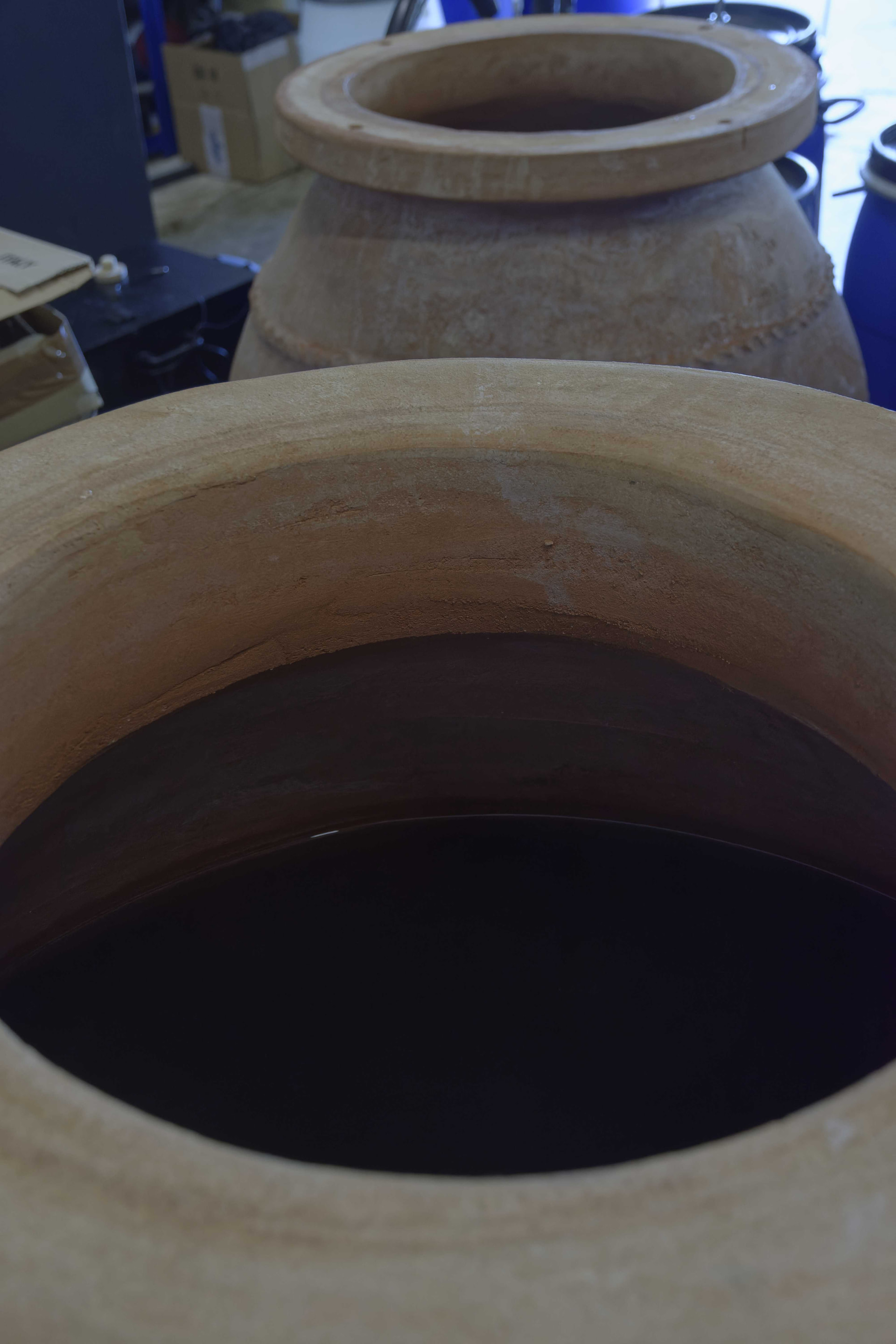
- What are the steps coming up with exotic finishes and aging methods?
I get the idea, I think about how to actually make it real, and I do it. One of the limits might be to get the actual administrative authorization, in the case of some extreme aging experiments in peculiar places.
- When something goes wrong, how do you compensate, save or salvage? Have you ever had to scrap a failed experiment?
It can happen, rum has a capacity of having a higher margin for error than whisky for instance, but I had happened. On the off-road underwater experiment for instance, part of the batch at 47% was overly salty and couldn’t be bottled, I kept it on the side for other experiments. There is a financial risk, but a mistake can be fixed. The feeling of having failed something is what hurts the most.
- What to expect in the near future?
Many more mischiefs!
//////////
Thanks to everyone for participating, especially @w00tAN, @MrRumantic, @ander_s and @RumTaTa for their questions.